





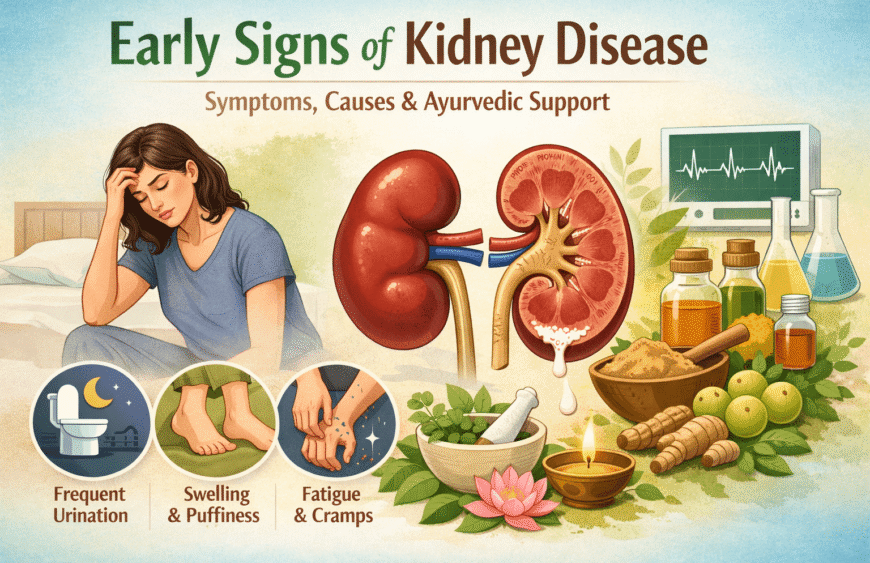
Kidney disease often progresses quietly, making early detection challenging. In many cases, people remain unaware of kidney dysfunction until noticeable damage has already occurred. The early signs of kidney disease are usually subtle, easily mistaken for routine fatigue, aging, or lifestyle stress. However, recognizing these early symptoms of kidney problems can play a critical role in protecting long-term kidney health.
From both a modern medical and Ayurvedic perspective, the kidneys are essential for detoxification, fluid balance, and overall metabolic harmony. Paying attention to early kidney health symptoms allows timely intervention, reduces complications, and supports better outcomes.
Table of Contents
Understanding Kidney Dysfunction in Its Early Stage
Kidney disease in its early stage rarely causes severe pain. Instead, it presents through gradual functional changes. Medically, early kidney dysfunction symptoms occur when the kidneys begin losing their ability to efficiently filter waste, balance electrolytes, and regulate fluids.
Ayurveda describes this condition as an imbalance of Mutravaha Srotas (urinary channels), often influenced by disturbed Vata, Pitta, or Kapha dosha, toxin accumulation (Ama), and weakened metabolic fire (Agni). Both systems emphasize that early warning signs should never be ignored.
1. Constant Tiredness, Weakness, and Low Energy
One of the most common early symptoms of kidney disease is persistent fatigue. When kidney function declines, toxins and metabolic waste accumulate in the bloodstream, leading to constant tiredness, reduced mental clarity, and lack of stamina.
From a clinical standpoint, early kidney damage may reduce the production of erythropoietin, a hormone essential for red blood cell formation. This can result in anemia, causing weakness, breathlessness, and poor concentration.
According to Ayurvedic understanding, this fatigue reflects Ama buildup and Vata imbalance, which disrupt proper tissue nourishment and energy levels. As noted by integrative practitioners like Dr. Kalpit Acharya, early fatigue is often one of the first signals that internal detoxification systems are under strain.
2. Changes in Urination Patterns
Changes in urination are among the most important kidney disease warning signs. These may include:
- Increased frequency of urination, especially at night
- Decreased or excessive urine output
- Dark, cloudy, or unusually pale urine
- Foamy or bubbly urine, indicating possible protein leakage
Protein in urine is a key marker of early kidney dysfunction and suggests that kidney filters are not working efficiently.
In Ayurveda, such symptoms indicate disturbance in Mutravaha Srotas, often linked to Pitta imbalance (burning sensation, discoloration) or Kapha imbalance (cloudy or frothy urine). Identifying these early changes in urine can help prevent further kidney damage.
3. Swelling Around the Eyes, Feet, or Ankles
Mild but recurring swelling is another early sign of damaged kidneys. When kidneys fail to remove excess sodium and fluids, the body begins retaining water. This commonly results in puffiness around the eyes in the morning and swelling in the feet or ankles later in the day.
From a medical view, this fluid retention indicates declining filtration efficiency. Ayurveda associates this symptom with Kapha accumulation and weakened metabolic function, where fluid metabolism becomes impaired.
Even slight, unexplained swelling should be evaluated, as it may reflect early-stage kidney disease rather than simple fatigue or prolonged standing.
4. Dry, Itchy Skin and Muscle Cramps
Healthy kidneys help regulate mineral and electrolyte balance. When kidney function is compromised, this balance can be disturbed, leading to dry, itchy skin and frequent muscle cramps—often appearing before advanced kidney disease is diagnosed.
Clinically, these symptoms may result from imbalanced calcium, phosphorus, or electrolyte levels. In Ayurveda, dry skin and muscle cramps are classic signs of aggravated Vata dosha, suggesting improper nourishment of tissues and dehydration at a cellular level.
Such kidney health symptoms are subtle but important indicators of internal imbalance.
Why Early Detection of Kidney Disease Matters
Early detection of kidney disease allows for effective management and, in many cases, prevents progression to chronic kidney failure. At this stage, kidney dysfunction is often manageable through:
- Dietary and lifestyle modifications
- Control of underlying conditions like diabetes and hypertension
- Regular monitoring of kidney function
- Supportive therapies focused on detoxification and balance
Individuals with risk factors such as diabetes, high blood pressure, family history of kidney disease, long-term medication use, or age above 60 should undergo routine tests such as eGFR, serum creatinine, and urine albumin.
Ayurveda’s Holistic Approach to Kidney Health
Ayurveda focuses on restoring balance rather than addressing isolated symptoms. For kidney health, this involves supporting digestion, metabolism, circulation, and elimination together.
Ayurvedic kidney care aims to:
- Reduce toxin buildup (Ama)
- Strengthen urinary channels
- Improve tissue nourishment (Dhatu Poshana)
- Support natural detoxification without harsh side effects
As emphasized in integrative Ayurvedic practice, including the clinical approach followed by specialists like Dr. Kalpit Acharya, early-stage kidney imbalance responds best to holistic support that combines preventive care with natural therapies.
A Preventive, Balanced Path Forward
Kidney disease does not develop overnight. The body sends early warning signs—fatigue, urination changes, mild swelling, skin issues—that signal the need for attention. Recognizing these early signs of kidney disease and responding promptly can protect kidney function and overall well-being. Combining modern diagnostics with Ayurveda’s time-tested wisdom offers a sustainable and preventive approach to kidney health. Early awareness, informed choices, and holistic care form the foundation of long-term renal wellness.






r7betsafiliados
25 October 2026 at 7:18 AMThe affiliate program is actually transparent and rewarding. It’s a great way to earn while sharing a platform that actually works r7betsafiliados