




If you’re living with arthritis, you already know that some days are harder than others. What you may not realise is that your fork has more power over your joint pain than almost anything else in your daily routine.
Arthritis is not just about ageing or genetics. Chronic inflammation the real driver of joint pain, swelling, and stiffness is significantly worsened or soothed by what you eat.
Research continues to confirm that dietary choices can either fan the flames of inflammation or help put them out.
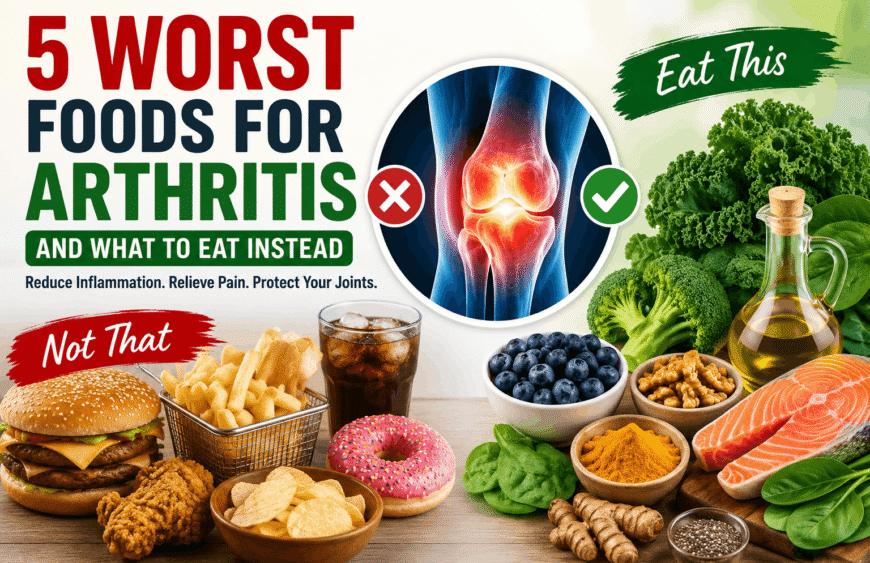
This guide breaks down the 5 worst foods for arthritis, explains the science behind each one, answers common questions about arthritis and diet, and gives practical food swaps you can start using today.
Quick Summary: Arthritis Foods At a Glance
| ❌ Foods to Avoid | ✅ Better Alternatives |
|---|---|
| Processed & Fried Foods | Baked salmon, grilled tofu |
| Sugar & Sugary Drinks | Fresh fruit, herbal tea, infused water |
| Red & Processed Meat | Lentils, chickpeas, fatty fish |
| Refined Carbs & White Flour | Quinoa, brown rice, oats |
| Alcohol | Green tea, turmeric golden milk |
Why Food Matters for Arthritis
Arthritis is an umbrella term for over 100 joint conditions. The most common types osteoarthritis (OA) and rheumatoid arthritis (RA) both involve inflammation at the joint level.
- Osteoarthritis: Breakdown of cartilage between bones, worsened by inflammation.
- Rheumatoid arthritis: Autoimmune condition where the immune system attacks joint tissue.
In both cases, pro-inflammatory foods trigger cytokines and inflammatory molecules that worsen pain, stiffness, and swelling.
The good news? Anti-inflammatory diets have been shown to reduce disease activity and improve quality of life.
❌ #1 — Processed and Fried Foods
Includes: fast food, fried chicken, chips, packaged snacks, frozen meals, margarine
Processed foods create harmful compounds called AGEs (Advanced Glycation End Products) during high-temperature cooking. These compounds increase inflammation and accelerate cartilage damage.
Many processed foods also contain trans fats, which stimulate inflammatory pathways linked to rheumatoid arthritis.
What to Eat Instead
- Bake, steam, or poach foods instead of frying
- Swap chips for walnuts or almonds
- Choose salmon or sardines instead of fast food
- Cook with olive oil or avocado oil
❌ #2 — Sugar and Sugary Drinks
Includes: soda, fruit juice, sweets, pastries, flavored yogurt, breakfast cereals
Sugar is one of the strongest dietary triggers of inflammation. It stimulates inflammatory cytokines and may worsen rheumatoid arthritis symptoms.
For gout sufferers, fructose is especially harmful because it increases uric acid production.
What to Eat Instead
- Sparkling water with lemon or cucumber
- Fresh berries for sweet cravings
- Plain Greek yogurt with a little honey
- Check food labels for hidden sugars
❌ #3 — Red Meat and Processed Meat
Includes: beef, pork, sausages, bacon, deli meats
Red and processed meats are high in saturated fats and purines, both of which increase inflammation and joint pain.
Processed meats can also worsen gout by increasing uric acid levels.
What to Eat Instead
- Fatty fish like salmon and sardines
- Lentils, chickpeas, and beans
- Tofu and tempeh
- Chicken or turkey instead of red meat
❌ #4 — Refined Carbohydrates and White Flour Products
Includes: white bread, pasta, white rice, doughnuts, crackers
Refined carbs spike blood sugar levels and contribute to chronic inflammation.
Gluten may also worsen symptoms in some rheumatoid arthritis patients.
What to Eat Instead
- Quinoa
- Oats
- Brown rice or millet
- Sweet potatoes
❌ #5 — Alcohol
Includes: beer, wine, spirits, cocktails
Alcohol increases inflammation, damages gut health, and may interfere with arthritis medications.
Beer is particularly problematic for gout sufferers because it contains both purines and fructose.
What to Drink Instead
- Green tea
- Turmeric golden milk
- Tart cherry juice
- Water with lemon
5 Vegetables to Avoid (or Limit) With Arthritis
Some arthritis sufferers report increased symptoms after eating nightshade vegetables.
- Tomatoes
- Bell peppers
- Eggplant
- White potatoes
- Goji berries
Glucosamine-Rich Foods — Do They Help?
Glucosamine supports cartilage synthesis and joint lubrication.
Natural sources include:
- Bone broth
- Shellfish shells
- Animal cartilage
Plant-based eaters can focus on vitamin C, sulfur-rich foods, and silicon-rich grains to support cartilage health naturally.
The Anti-Arthritis Eating Plan – What to Eat More Of
| Food | Why It Helps Arthritis |
|---|---|
| Fatty fish | Omega-3s reduce inflammation and stiffness |
| Walnuts | Plant-based omega-3 fats |
| Blueberries & tart cherries | Reduce inflammation and uric acid |
| Olive oil | Natural anti-inflammatory effects |
| Spinach & kale | Protect cartilage with antioxidants |
| Garlic & onions | Reduce inflammatory enzymes |
| Turmeric | Curcumin helps fight inflammation |
| Green tea | Supports cartilage health |
| Beans & lentils | Fiber + plant protein |
| Broccoli | Blocks inflammatory enzymes |
The Bottom Line
Your diet may not cure arthritis, but it is one of the most powerful tools available to reduce inflammation, decrease pain, and protect joint health over time.
Cutting back on processed foods, sugar, red meat, refined carbohydrates, and alcohol can significantly improve symptoms for many people.
Small changes matter. Replacing one inflammatory food category at a time with healthier alternatives is a practical and sustainable approach.
⚕️ Medical Disclaimer
This article is intended for informational purposes only and does not constitute medical advice. Always consult your doctor or a registered dietitian before making significant dietary changes, especially if you are taking arthritis medications or managing other health conditions.