


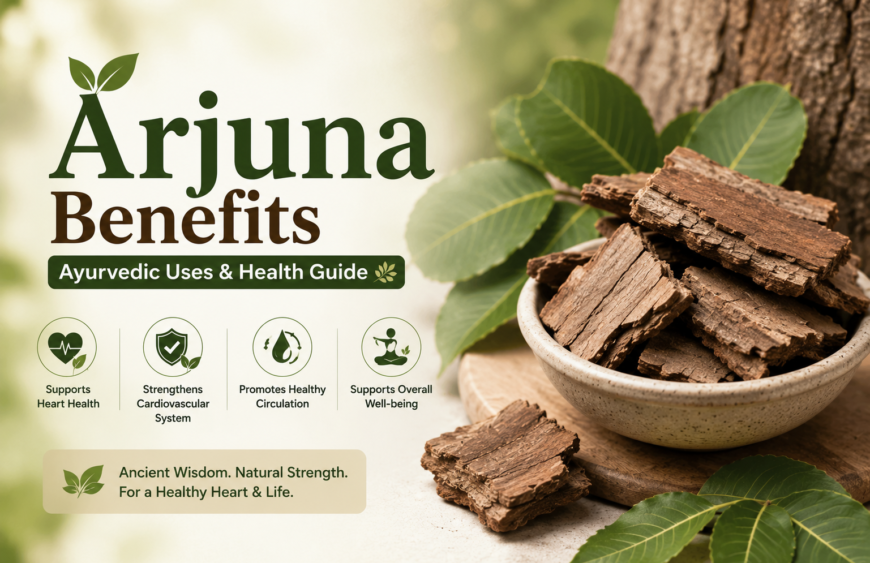
Arjuna (Terminalia arjuna) is one of the most respected medicinal trees in Ayurveda and has been used for centuries to support heart health and overall wellness. The many arjuna benefits described in traditional Ayurvedic texts have made this herb an important ingredient in numerous herbal formulations. Rich in antioxidants, flavonoids, tannins, and natural plant compounds, Arjuna continues to be valued for supporting cardiovascular wellness, healthy circulation, and general vitality.
Today, scientific research is exploring several traditional arjuna benefits, while Ayurveda continues to recommend this herb as part of a balanced lifestyle. Although Arjuna has a long history of traditional use, it should not replace medical treatment for heart disease or any other health condition.
What is Arjuna?
Arjuna is a large evergreen tree native to India and belongs to the Combretaceae family. The bark of the tree is the most commonly used part in Ayurvedic medicine because it contains a rich concentration of beneficial plant compounds.
For thousands of years, Ayurvedic practitioners have used Arjuna bark in herbal preparations intended to support cardiovascular health, maintain healthy circulation, and promote overall strength. Today, it remains one of the best-known herbs in traditional Indian medicine.
Nutritional and Active Compounds in Arjuna
Many arjuna benefits are associated with its naturally occurring bioactive compounds, including:
- Flavonoids
- Tannins
- Triterpenoids
- Saponins
- Glycosides
- Polyphenols
- Calcium
- Magnesium
- Zinc
- Natural antioxidants
These compounds are being studied for their antioxidant and cardioprotective properties, although further clinical research is still ongoing.
Top Arjuna Benefits in Ayurveda
1. Traditionally Supports Heart Health
One of the most recognized arjuna benefits is its traditional use for maintaining heart wellness.
Ayurveda has long valued Arjuna bark for supporting the normal functioning of the heart and promoting healthy circulation. Because of this reputation, Arjuna remains one of the most widely used herbs in Ayurvedic cardiovascular formulations.
Modern studies are investigating these traditional uses, although more high-quality human research is still needed.
2. Rich in Natural Antioxidants
Another important arjuna benefits is its high antioxidant content.
Antioxidants help protect the body’s cells from oxidative stress caused by free radicals. This protective action contributes to overall wellness and healthy aging.
Including antioxidant-rich foods and herbs as part of a balanced lifestyle supports long-term health.
3. Supports Healthy Blood Pressure
Traditional Ayurvedic literature describes Arjuna as a herb that helps maintain healthy circulation.
Some modern research suggests Arjuna may help support healthy blood pressure levels that are already within the normal range. However, people with hypertension should continue following their healthcare provider’s advice and prescribed treatment.
4. May Support Healthy Cholesterol Levels
Several early studies have explored Arjuna’s potential role in supporting healthy cholesterol levels already within the normal range.
Although the findings are promising, larger clinical trials are required before definitive conclusions can be made. Maintaining a healthy diet and regular physical activity remain essential for cardiovascular wellness.
5. Supports Physical Strength and Recovery
Ayurveda considers Arjuna a strengthening herb that helps maintain stamina and physical resilience.
Traditional practitioners often include Arjuna in herbal preparations intended to support overall vitality and promote recovery after physical exertion.
6. Supports Healthy Liver Function
Among the traditional arjuna benefits, support for liver wellness is also mentioned in Ayurvedic literature.
Its naturally occurring antioxidants may help protect cells from oxidative stress, contributing to healthy liver function as part of a balanced lifestyle.
Research in this area is ongoing, and more human studies are needed.
7. Promotes Overall Wellness
Arjuna has long been regarded as a rejuvenating herb that supports multiple body systems.
Its combination of antioxidants, minerals, and bioactive compounds makes it an important ingredient in Ayurvedic formulations designed to promote general health and vitality.
Ayurvedic Properties of Arjuna
According to Ayurveda, Arjuna possesses the following characteristics:
- Rasa (Taste): Kashaya (Astringent)
- Guna (Qualities): Laghu (Light), Ruksha (Dry)
- Virya (Potency): Cooling
- Vipaka: Katu (Pungent)
Ayurvedic practitioners traditionally believe Arjuna helps balance Kapha and Pitta doshas while supporting cardiovascular wellness.
How is Arjuna Traditionally Used?
Arjuna is commonly available in several Ayurvedic forms, including:
- Bark powder (Churna)
- Decoction (Kwath)
- Capsules
- Tablets
- Herbal extracts
- Multi-herb Ayurvedic formulations
The suitable form depends on individual health needs and should always be used according to product instructions or professional guidance.
Safety and Precautions
Arjuna has been used in Ayurveda for generations and is generally considered safe when consumed in recommended amounts.
However, some precautions should be followed:
- Pregnant and breastfeeding women should consult a healthcare professional before use.
- Individuals taking medicines for heart disease or blood pressure should seek medical advice before adding Arjuna supplements.
- Avoid self-medicating for cardiovascular conditions.
- Always use products from trusted manufacturers that follow quality standards.
Arjuna in Ayurvedic OTC Medicines
Because of its traditional importance in supporting cardiovascular and overall wellness, Arjuna is included as an ingredient in several Ayurvedic OTC formulations.
At Goelar Health Group, Arjuna is used in selected Ayurvedic formulations, including:
These formulations combine Arjuna with other carefully selected Ayurvedic herbs to support daily wellness as part of a healthy lifestyle.
Learn More About Ayurvedic Herbs
If you enjoy learning about traditional Ayurvedic ingredients, you may also like reading neem leaves benefits. Neem is another highly valued Ayurvedic herb that is widely used in herbal formulations for supporting skin health, immunity, digestion, and overall wellness.
Final Thoughts
The many arjuna benefits described in Ayurveda have made this remarkable herb one of the most respected medicinal plants in traditional Indian medicine. From supporting heart health and healthy circulation to providing antioxidant protection and promoting overall vitality, Arjuna continues to be widely used in Ayurvedic wellness practices.
Although scientific research continues to investigate its health benefits, Arjuna should be viewed as a supportive herbal ingredient rather than a replacement for conventional medical care. Maintaining a healthy diet, regular exercise, stress management, and routine medical check-ups remain the foundation of good cardiovascular health. When choosing Ayurvedic products containing Arjuna, always follow the recommended dosage and consult a qualified healthcare professional whenever necessary.