





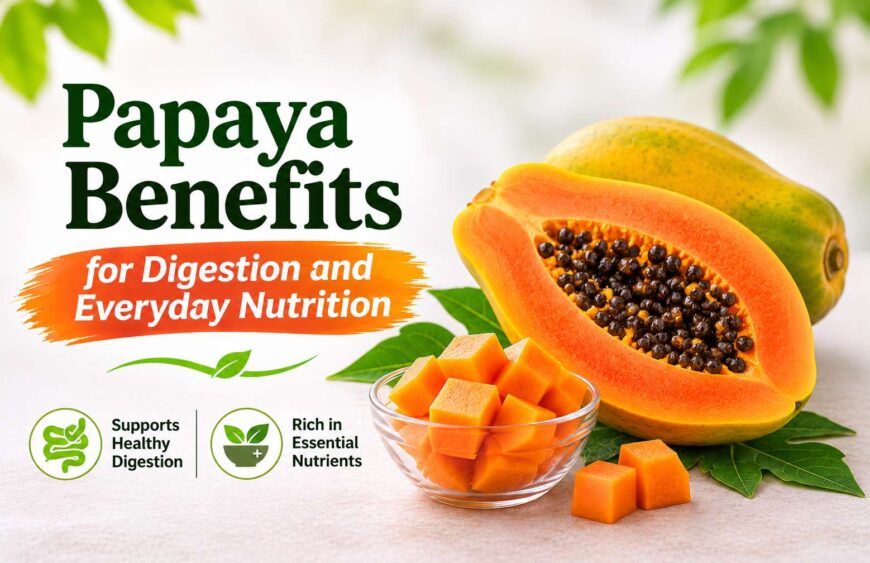
Papaya benefits include vitamin C and fibre in an easy breakfast or snack. The fruit is soft, easy to cut and often available year-round in India. You can serve it in cubes or blend it and keep the pulp. It does not need sugar to become a useful part of a meal.
Most of these papaya benefits come from the ripe flesh. Green papaya is cooked as a vegetable. Leaves and seeds are also sold as powders, juices and other remedies. They have different uses and safety concerns, so start by checking which part of the plant a claim refers to.
Papaya Benefits: What Ripe Papaya Gives Your Body
A cup of raw red-fleshed papaya can provide substantial vitamin C. Your body uses this nutrient to make collagen, which helps maintain skin and other tissues. Vitamin C also supports normal immune function and helps the body absorb iron from plant foods. If you have a meal with beans or lentils, fruit can be one way to include a source of vitamin C.
Ripe papaya also contains fibre. You get it when you eat the flesh, and much of it stays in the glass if you blend the whole flesh. A fine strainer can leave some pulp behind. If you buy papaya juice or a smoothie, read the fruit percentage and check for added sugar.
The orange-red colour comes in part from plant pigments called carotenoids. Some of them, such as beta-carotene, can help the body make vitamin A. A small meal study found that the body absorbed beta-carotene and lycopene from papaya well. The result shows how the fruit can supply those nutrients as part of a varied diet.
Does Eating Papaya Help Constipation?
Fibre from fruit can help make up part of the fibre you need through the day. Papaya is one option alongside foods such as vegetables, beans, oats and other fruits. If you usually eat little fibre, add it gradually and drink enough water for your needs.
A small study found less constipation and bloating among people who took a specific papaya product for several weeks. It tested a processed preparation and relied on how people described their symptoms. The study cannot tell us how many pieces of ripe fruit would help someone with ongoing constipation. If discomfort or a change in bowel habits lasts, ask a doctor about the cause.
How to Buy and Serve Ripe Papaya
Look for a fruit with a little give and no leaking spots or mould. Colour can vary by variety, so also pay attention to how it feels. Wash the outside before cutting. Scoop out the seeds, peel the fruit and put any cut pieces you are saving in the fridge.
Try a bowl of papaya cubes on its own, use them to top plain curd, or add them to a fruit salad. For a smoothie, blend the fruit without straining out the pulp. When comparing packaged options, check how much of the drink is fruit and whether it contains syrup or added sugar. What you actually drink can vary far more than the name suggests.
How to Make Papaya Part of a Meal
A bowl of plain papaya works when you want fruit on its own. To make a snack that includes protein, serve the cubes with plain curd if you eat dairy. If breakfast is usually toast or poha, papaya can go on the side. A few pieces add colour and flavour without changing the dish itself.
Papaya makes some smoothies thick without much extra work. Add a little water or plain curd as needed and blend just enough to mix. When you cut a whole fruit, think about how much you will serve now and how much you need to refrigerate. A ripe papaya can soften quickly once opened.
What Makes Papaya a Convenient Source of Vitamin C?
Many sources of vitamin C fit into Indian meals, including guava, amla and some vegetables. Papaya is convenient because you can serve the ripe flesh without cooking. If you already eat another fruit at breakfast, you can rotate in papaya when it is available. Different fruits bring their own mix of fibre, water and other nutrients.
An individual fruit can differ in sweetness and texture. If very ripe papaya tastes too strong, try a firm ripe fruit or mix a few cubes with another fruit you enjoy. The best serving is one you actually want to eat.
If digestive discomfort includes burning or reflux, our guide to home remedies for acidity explains everyday steps and when to seek care. For readers exploring an Ayurvedic product for acidity, Goelar Health Group offers Acican Syrup; ask a qualified clinician whether it suits your symptoms and medicines. It is separate from the nutritional benefits of eating papaya.
Green Papaya, Seeds and Leaf Juice
Green papaya is firm and works in cooked dishes. It contains more of the milky sap associated with unripe fruit. Some people use papaya seeds for intestinal worms, but the available studies do not give a dependable dose or show how they compare with standard treatment. If you think you have worms, ask for the right diagnosis and care.
Papaya leaf extracts have been studied in dengue. Some studies reported a faster rise in platelet counts, but a review found too little good evidence on serious outcomes. Someone with suspected dengue needs medical assessment. Platelet counts are one part of monitoring and cannot tell you on their own how safely a person is recovering.
Papaya Side Effects and Pregnancy Precautions
Avoid papaya if you have a known allergy. Some people with a natural rubber latex allergy also react to papaya. Seek emergency help if your tongue or throat swells or breathing becomes difficult.
Pregnancy questions often involve the difference between ripe and unripe fruit. An animal study raised concerns about the sap in unripe papaya, and good human evidence is limited. Ask your maternity care provider about green or partly ripe papaya. Check first before taking papaya leaf or seed supplements, especially during pregnancy or alongside medicine.
Frequently Asked Questions
Can I eat ripe papaya every day?
Ripe papaya can fit into a varied diet if you tolerate it. There is no special daily amount you need to hit.
Is papaya better before or after a meal?
Have it at a time that suits you. Researchers have yet to show that eating papaya on an empty stomach provides a special benefit.
Is blended papaya as good as sliced papaya?
Both can provide the flesh and its fibre if you blend the whole fruit and keep the pulp. A strained juice may contain less fibre.
Sources
University of Guam nutrition guide to ripe papaya
NIH on vitamin C
Study of carotenoids from papaya
Trial of a papaya preparation for digestive symptoms
Review of papaya leaf extract in dengue
Animal study on papaya ripeness and pregnancy