




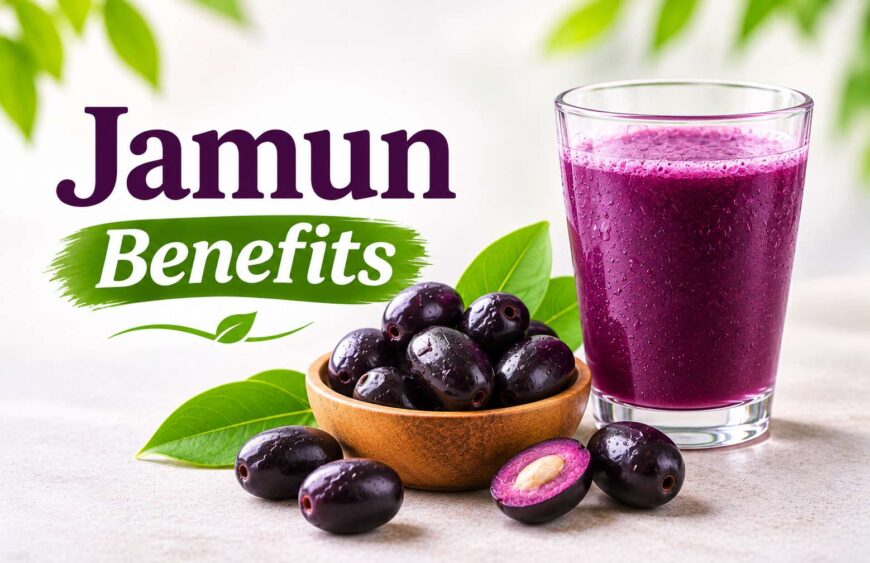
Ripe jamun is a juicy, seasonal fruit with a sharp taste and dark purple flesh. Eating the whole flesh gives you its pulp and the plant pigments that can leave your mouth purple. It is easy to serve the fresh fruit by itself, without turning it into a sweet drink.
People also look up jamun benefits because the seed powder is often sold for blood sugar. The fruit, the seed and the leaf have been studied in different ways. The results are useful only when you know which part a study tested.
Jamun Benefits: Colour, Taste and Everyday Nutrition
Jamun is also called Java plum or Indian blackberry. Its scientific name is Syzygium cumini. The skin and flesh of a ripe fruit can be deep purple, with a large seed in the centre. The fruit can taste sweet or sour and leave the mouth feeling dry.
The purple colour comes from plant pigments called anthocyanins. These pigments also give colour to other foods, including some purple grapes. Jamun contains other plant substances such as tannins, which help explain that dry feeling. Scientists have found antioxidant activity in lab tests using concentrated jamun extracts. The lab findings do not tell us whether a serving of fruit will change a person’s health or risk of disease.
What you can enjoy directly is the fruit itself. Wash it, eat the flesh and discard the hard seed. If you drink a home blend, keeping the pulp gives you more of the original fruit than pouring it through a fine strainer.
Can People With Diabetes Eat Jamun?
Jamun contains natural sugar. If you follow a diabetes meal plan, you can ask how a portion fits alongside the rest of the meal. While a serving of whole fruit can fit some plans, jamun has not been established as a way to lower blood sugar. Continue to follow the checking schedule and treatment recommended for you.
The serving matters if you choose a drink. A sweetened jamun beverage can contain sugar, syrup, water and other fruit juices. Check the ingredients and how much the label calls a serving. If it is a syrup meant for dilution, check whether the nutrition information refers to the syrup in the bottle or the drink after mixing.
For a wider view of meal choices and medical care, see our guide to diabetes symptoms, types and treatment. Readers comparing Ayurvedic products can review Goelar Health Group’s Diamos Capsule with their clinician. Check the complete ingredients before combining it with glucose-lowering medicine; neither jamun nor a supplement replaces prescribed treatment.
What Does Jamun Seed Powder Research Show?
A small study discussed in a research review tested a specific amount of jamun seed powder in people with type 2 diabetes. Some blood sugar measures improved, including a test called HbA1c. That test reflects average blood sugar over the previous few months. The improvement needs confirmation in larger, independent studies.
The product and serving in a study may differ from the seed powder sold in a shop. Researchers have yet to establish a safe, effective home dose. If you take medicine for diabetes, ask your doctor before adding a supplement. A change in your blood sugar can affect how you manage your medicine.
Does Jamun Leaf Tea Work the Same Way?
In a small trial, researchers compared jamun leaf tea with a placebo and a diabetes medicine. Fasting blood sugar fell in the group taking the medicine. The leaf tea group showed no clear improvement.
Some drinks sold as jamun tea contain several plants. The name may refer to the leaf, the seed or a fruit flavour. Check the label for what is actually in it. If you use a herbal tea often and take regular medicines, let your clinician know which one you use.
How to Buy and Use Fresh Jamun
Look for firm, ripe fruits without leaking spots or mould. Rinse them before serving and keep them cool if you are saving them. The stone is hard and can be a choking hazard for children. Remove it and serve the flesh in pieces that suit the child’s age.
For a packaged fruit product, look at the fruit percentage and added sugar. For a powdered supplement, look for the scientific name, the part of the tree, the amount in a serving and a batch number. If you use regular medicine, take a photo of the list so you can ask a pharmacist about all the ingredients.
How Jamun Fits Into Different Meals
A small bowl of ripe jamun can be served the same way you would serve other seasonal fruit. Wash it, remove any damaged fruit and leave the seeds out when serving young children. The sweet and sour taste can vary between batches, so taste a ripe piece before deciding whether you want to add anything.
If you make a blend, check how much of the glass is fruit and how much is water. If you are adding several fruits, count all of them when you work out the serving. The dark colour can stay strong even after you dilute the juice. It tells you very little about how much jamun or added sugar is in each glass.
What to Look for in a Jamun Supplement
Some labels use jambolan or Syzygium cumini instead of jamun. Look for a separate line that names the plant part. The weight of an extract describes a different material from the same weight of ground seed. A blend can also contain additional herbs that affect how the product behaves.
If a claim comes with a study, check the product named there. The available studies looked at particular preparations, and one small result cannot tell you what will happen with another product.
Who Should Be Careful With Jamun Products?
Avoid jamun if you have a known allergy. If your tongue or throat swells or you have trouble breathing after eating it, seek emergency help. Speak to a doctor before taking concentrated products during pregnancy or breastfeeding, giving a supplement to a child, or combining one with medicines that lower blood sugar.
If you regularly get unexpected high or low blood sugar readings, seek medical advice. It is important to find out why rather than trying a different seed or leaf preparation on your own.
Frequently Asked Questions
Is jamun juice better than whole jamun?
Whole jamun keeps the flesh and pulp. Juice may be strained or sweetened, so check the fruit content and the ingredients if you buy it.
Can I eat the jamun seed?
The hard seed is usually discarded when you eat the fruit. Seed powder is a separate product with its own safety questions.
Can I eat jamun every day during its season?
You can include it as a fruit if you tolerate it and the portion suits your meals. There is no established daily serving that provides a specific health effect.
Sources
Laboratory study of plant pigments in jamun extracts
Research review discussing jamun seed powder
Human trial of jamun leaf tea