Kidney stones are a painful and increasingly common health condition affecting millions of people worldwide. They form when certain minerals and salts in the urine become highly concentrated and crystallize inside the kidneys. Over time, these crystals can grow into solid stones that may cause severe pain, difficulty in urination, nausea, or even urinary infections.
One of the most effective ways to manage and prevent kidney stones is through diet and hydration. Many people often ask two important questions:
- What to eat with kidney stones?
- What not to eat with kidney stones?
Understanding the right dietary choices can help reduce the risk of stone formation, support kidney function, and promote smoother urinary flow. In this guide, we will explore the foods that can support kidney health and the foods that should be limited or avoided.
Why Diet Matters in Kidney Stones
Before understanding what to eat with kidney stones, it is important to know why diet plays such a crucial role.
Kidney stones are commonly formed due to an imbalance of minerals in the urine. When substances like calcium, oxalate, uric acid, and phosphate become highly concentrated, they can stick together and form crystals. Over time, these crystals grow into stones.
Diet affects kidney stones in several ways:
- It controls the amount of minerals entering the body
- It affects urine acidity and mineral balance
- It influences hydration levels
- It supports the natural flushing of waste from the kidneys
A proper diet helps keep urine diluted and balanced, making it harder for stones to form.
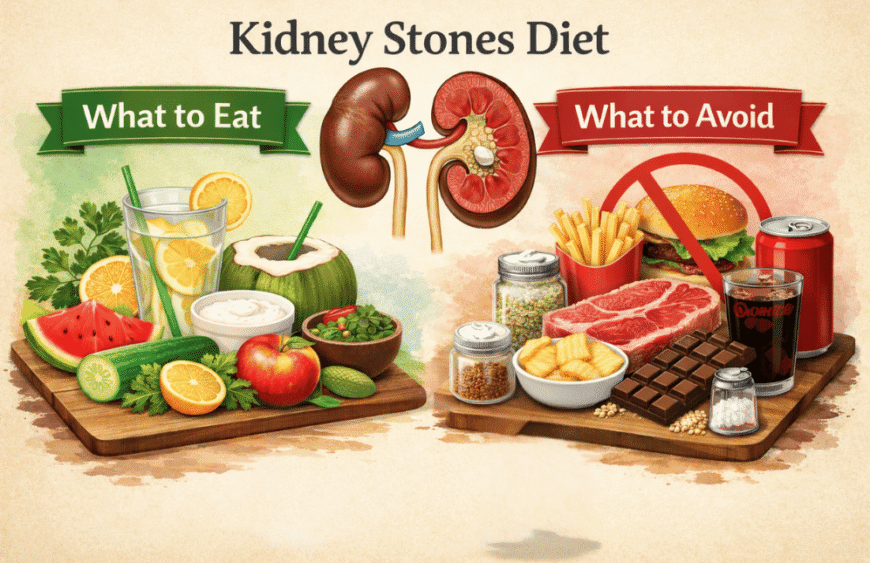
What to Eat with Kidney Stones
Choosing the right foods can help prevent new stones from forming and may also help the body pass small stones more easily.
Below are some of the most beneficial foods and dietary habits for kidney stone management.
1. Drink Plenty of Fluids
Hydration is the most important factor in preventing kidney stones.
When the body does not get enough fluids, urine becomes concentrated. This increases the likelihood that minerals like calcium and oxalate will stick together and form stones.
Drinking sufficient water helps in several ways:
- Dilutes the concentration of stone-forming minerals
- Helps flush small crystals out of the kidneys
- Supports normal kidney filtration
Most health experts recommend drinking at least 8–12 glasses of water per day.
In addition to water, the following natural drinks may help support kidney health:
- Coconut water
- Lemon water
- Barley water
- Fresh fruit-infused water
Lemon water is particularly helpful because it contains citrate, a natural compound that helps prevent calcium stones from forming.
2. Include Calcium-Rich Foods in Your Diet
Many people mistakenly believe that calcium should be avoided when dealing with kidney stones. However, this is not always true.
In fact, dietary calcium can help reduce the risk of certain kidney stones, particularly calcium oxalate stones.
Here is why calcium is important:
When calcium is consumed through food, it binds with oxalate in the digestive tract before it reaches the kidneys. This prevents oxalate from entering the urine and forming stones.
Healthy calcium sources include:
- Milk
- Yogurt
- Cheese
- Paneer
- Calcium-fortified foods
However, excessive calcium supplements without medical advice may increase the risk of stones, so it is better to obtain calcium naturally through foods.
3. Eat Plenty of Fruits and Vegetables
Fruits and vegetables are extremely beneficial for kidney health because they help balance the body’s mineral levels and reduce urine acidity.
Many fruits and vegetables contain:
- Potassium
- Magnesium
- Natural antioxidants
- Water content
These nutrients support kidney function and help reduce the risk of stone formation.
Some of the best options include:
- Watermelon
- Apples
- Papaya
- Bananas
- Cucumber
- Bottle gourd (lauki)
- Pumpkin
- Carrots
These foods also help keep the body hydrated and support natural detoxification.
4. Consume Foods Rich in Citrate
Citrate is a natural substance that helps prevent kidney stones. It works by binding with calcium in the urine and preventing crystals from forming.
Foods rich in citrate include:
- Lemons
- Oranges
- Sweet lime (mosambi)
- Grapefruit
Regular consumption of citrus fruits or lemon water may reduce the risk of calcium-based kidney stones.
This is why many doctors recommend starting the day with a glass of warm lemon water.
5. Choose Whole Grains and Balanced Protein
Whole grains and moderate protein intake can support kidney health without increasing stone risk.
Healthy options include:
- Oats
- Whole wheat
- Brown rice
- Quinoa
- Lentils (in moderate quantities)
Protein is important for body repair and muscle health, but excessive protein intake especially from animal sources may increase the risk of uric acid stones.
Therefore, balance is important.
What Not to Eat with Kidney Stones
While certain foods help prevent kidney stones, others may increase the risk of stone formation. Understanding these foods can help you make better dietary decisions.
1. High-Oxalate Foods
Oxalate is a natural compound found in many plant foods. When oxalate combines with calcium in the urine, it can form calcium oxalate stones, which are the most common type of kidney stones.
Foods high in oxalates include:
- Spinach
- Beetroot
- Chocolate
- Almonds and nuts
- Tea
- Soy products
This does not mean these foods must be completely avoided. However, they should be consumed in moderation and ideally paired with calcium-rich foods to reduce oxalate absorption.
2. Excess Salt (High Sodium Foods)
High sodium intake can significantly increase the risk of kidney stones.
When you consume too much salt, the kidneys release more calcium into the urine. This extra calcium can combine with other substances and form stones.
Foods high in sodium include:
- Packaged snacks
- Instant noodles
- Pickles
- Processed foods
- Fast food items
Reducing salt intake not only helps prevent kidney stones but also supports overall heart and kidney health.
3. Too Much Animal Protein
Excessive consumption of animal protein can increase the production of uric acid in the body.
High uric acid levels may lead to uric acid stones, another common type of kidney stones.
Foods to limit include:
- Red meat
- Organ meat
- Processed meat
- Excess chicken and seafood
Moderate protein intake is important, but excessive consumption can put stress on the kidneys.
4. Sugary Drinks and Soft Drinks
Sugary beverages and sodas are often linked with a higher risk of kidney stones.
These drinks may:
- Increase sugar levels in urine
- Contain phosphoric acid that affects mineral balance
- Reduce overall hydration quality
Common drinks to limit include:
- Soft drinks
- Energy drinks
- Packaged fruit juices
- High-sugar beverages
Choosing natural drinks such as water, lemon water, or coconut water is a much healthier option.
Additional Lifestyle Tips to Prevent Kidney Stones
Besides diet, several lifestyle habits can also help reduce the risk of kidney stones.
Helpful habits include:
- Drinking water regularly throughout the day
- Maintaining a healthy body weight
- Staying physically active
- Avoiding excessive processed foods
- Not holding urine for long periods
These simple habits support proper kidney function and help the body eliminate toxins efficiently.
Ayurvedic Support for Kidney Stones and Urinary Health
While diet and hydration form the foundation of kidney stone management, many people also look for natural Ayurvedic support to maintain kidney and urinary health.
Ayurveda traditionally focuses on supporting the body’s natural detoxification processes and maintaining balance in the urinary system.
One supportive option is Urepro Kit Ayurvedic Combo for Kidney Stones & Urinary Wellness.
This Ayurvedic combination is designed to support individuals dealing with kidney stones and urinary discomfort. The formulation focuses on helping the body naturally support stone breakdown, promote detoxification, and maintain smooth urinary flow. Such herbal combinations are often used to complement healthy lifestyle habits and dietary management.
Another supportive option is Urepro KFT Syrup Sugar Free – Ayurvedic Support for Enhanced Kidney Function (200 ML).
This sugar-free Ayurvedic polyherbal formulation is designed to support healthy kidney function while promoting urinary comfort. It is formulated to assist natural detoxification and help maintain proper urinary balance. Because it is sugar free, it may also be suitable for individuals who are monitoring their sugar intake.
When used alongside proper hydration and a kidney-friendly diet, Ayurvedic formulations like these can provide additional support for maintaining urinary wellness.
Conclusion
Understanding what to eat with kidney stones and what not to eat with kidney stones is essential for preventing future stone formation and maintaining kidney health.
A diet rich in fluids, fruits, vegetables, and balanced nutrients helps dilute urine and reduce the concentration of stone-forming minerals. At the same time, limiting foods high in oxalates, sodium, and excessive animal protein can lower the risk of kidney stones. By combining the right dietary habits, healthy lifestyle practices, and supportive natural formulations, it is possible to promote long-term kidney health and maintain a healthy urinary system.