




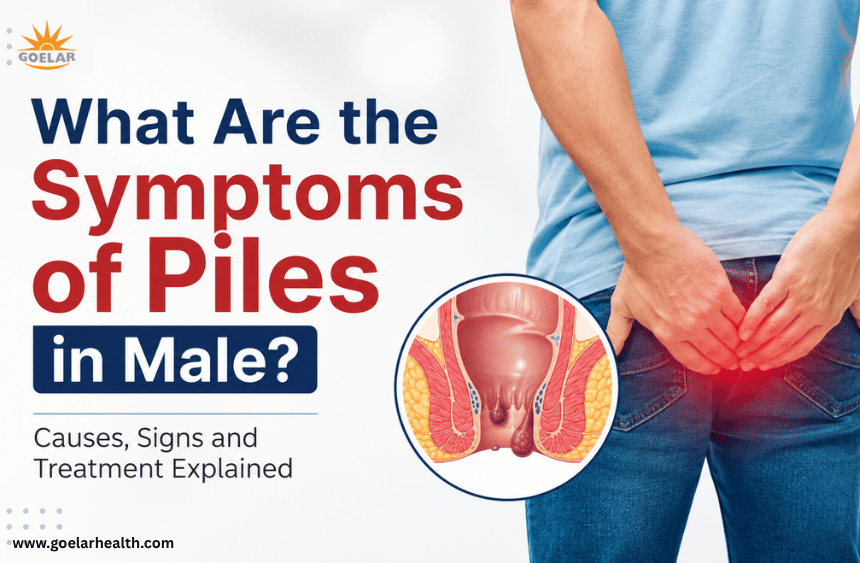
Piles is one of the most common health problems in India, yet most men avoid talking about it. If you feel pain near your anus, notice blood after using the toilet, or have itching that just won’t go away you are not alone. This article explains the symptoms of piles in male, what causes them, and how to get rid of piles before the condition gets worse.
Table of Contents
What Is Piles?
Piles, also called hemorrhoids, are swollen blood vessels in or around the anus and lower rectum. These vessels normally help control bowel movements. When they get inflamed or enlarged due to pressure, they cause pain, bleeding, and discomfort.
Piles disease is very common in men, especially those aged 30 and above. The good news is piles can be cured, especially when caught early.
Types of Piles
Before understanding the symptoms, it helps to know the types of piles:
Internal Piles – Found inside the rectum. Usually painless but can cause bleeding.
External Piles – Found under the skin around the anus. Often painful and itchy.
Prolapsed Piles – Internal piles that push outside the anus. Can cause significant discomfort.
Thrombosed Piles – When a blood clot forms inside an external pile, causing sudden, severe pain and swelling.
Symptoms of Piles in Male
This is the most important section. Many men confuse piles symptoms with other conditions, which delays treatment. Here are the clear warning signs to watch for:
1. Bleeding During Bowel Movements
The most common symptom of piles in male is bright red blood on toilet paper or in the toilet bowl after passing stool. The blood is usually painless. Do not ignore this. While piles is the most common cause, rectal bleeding should always be checked by a doctor.
2. Itching Around the Anus
Persistent itching or irritation around the anal area is a very common piles symptom. It is caused by mucus discharge or inflammation from the swollen tissue. The itching can be mild or severe enough to disturb daily life.
3. Pain or Discomfort
External piles often cause pain, especially when sitting, walking, or during bowel movements. Internal piles are usually painless unless they prolapse (come out of the anus). Thrombosed piles cause sudden, sharp pain.
4. Swelling or a Lump Near the Anus
You may feel or see a soft lump near the opening of the anus. This lump is the swollen blood vessel. It may be tender to the touch. In some cases, it goes back inside on its own; in others, it needs to be pushed back manually.
5. Feeling of Incomplete Bowel Movement
Many men with piles feel like they have not fully emptied their bowels even after using the toilet. This uncomfortable feeling is a result of the swollen tissue creating pressure in the rectal area.
6. Mucus Discharge
A sticky or slimy discharge from the anus is another symptom of piles. This mucus can cause skin irritation and increase itching around the anus.
7. Difficulty Sitting for Long Periods
Men who work desk jobs or drive for long hours often notice that piles make sitting painful and uncomfortable. The pressure on the anal area while sitting aggravates the swollen tissue.
Important: If you notice any of these symptoms, do not self-diagnose. Visit a doctor for proper examination.
What Is the First Stage of Piles?
Piles progress through four grades:
| Grade | What Happens |
| Grade 1 | Small swellings inside the anus. No prolapse. Mild bleeding. |
| Grade 2 | Piles come out during bowel movements but go back in on their own. |
| Grade 3 | Piles come out and need to be pushed back in manually. |
| Grade 4 | Piles stay outside permanently and cannot be pushed back. |
The first stage of piles is the easiest to treat. At this point, simple dietary and lifestyle changes are often enough to control the condition.
Reasons for Piles in Males
Understanding the reason for piles helps you prevent it from coming back:
- Chronic constipation – Straining during hard stools puts intense pressure on rectal veins.
- Low-fiber diet – Common in Indian men who eat less fruits and vegetables.
- Sitting for long hours – Office workers and truck drivers are at higher risk.
- Heavy lifting – Weightlifters and men doing physical labour are frequently affected.
- Obesity – Excess body weight increases pressure on the lower rectum.
- Dehydration – Not drinking enough water leads to hard stools.
- Family history – Piles can run in families.
Can Piles Be Cured?
Yes – piles can be cured. Early-stage piles (Grade 1 and 2) often respond well to home care and medication. Advanced stages may need a medical procedure or surgery.
The key is not to ignore the symptoms and seek treatment early.
How to Get Rid of Piles
At Home
- Eat more fiber – Include fruits, vegetables, whole grains, and pulses in every meal.
- Drink more water – Aim for 8 – 10 glasses per day to soften stools.
- Sitz bath – Sit in warm water for 15 minutes, 2 – 3 times a day to reduce pain and swelling.
- Do not strain – Never force a bowel movement. Take your time.
- Avoid sitting too long on the toilet – It increases pressure on the anal veins.
- Exercise regularly – Even 30 minutes of walking helps improve bowel movement.
With Medical Treatment
- OTC creams and ointments – Reduce itching and inflammation for mild cases.
- Rubber band ligation – A common, non-surgical procedure for Grades 2 and 3.
- Sclerotherapy – An injection that shrinks piles tissue.
- Laser surgery – A modern, minimally invasive option with quick recovery. Suitable for Grade 3 and 4.
- Hemorrhoidectomy – Traditional surgical removal for severe cases.
When to See a Doctor
See a doctor immediately if you notice:
- Rectal bleeding that does not stop
- Severe pain around the anus
- A lump that cannot be pushed back
- Symptoms that are not improving after one week of home care
- Blood mixed with stool (not just on toilet paper)
Do not feel embarrassed. Piles is a very common condition and your doctor has treated it many times before.
Support Your Recovery with Ayurvedic Care
Alongside diet and lifestyle changes, you can also turn to trusted Ayurvedic support. Pill-Heal Capsules offer a natural herbal blend made from ingredients like Daruhaldi, Harad, Mulethi, and Apamarg. These capsules help reduce itching, swelling, and discomfort, support smooth bowel movements, and ease strain during passing stool. If you’re looking for an ayurvedic medicine for piles and fissures, Pill-Heal works as a gentle, effective daily support for digestive balance and anal comfort.
Conclusion
The symptoms of piles in male bleeding, itching, pain, lumps, and discomfort are clear signs that something needs attention. Piles disease is not something to be ashamed of or ignored. The earlier you act, the simpler the treatment. Start with a high-fiber diet, drink plenty of water, and see a doctor if symptoms persist. Piles can be cured and your quality of life will be much better for it.