




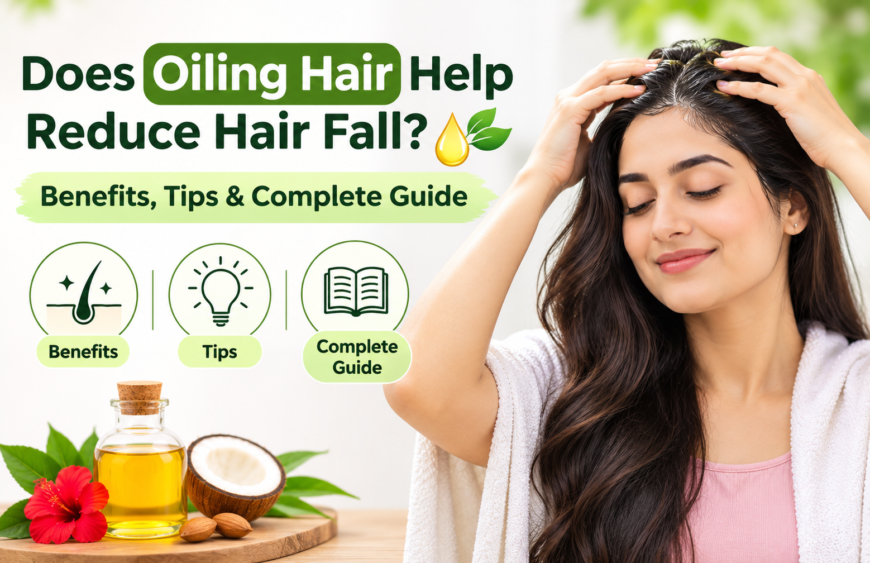
Hair oiling has been a part of traditional hair care for generations, especially in India. Many people believe that applying oil regularly can reduce hair fall, strengthen hair, and promote healthy growth. From coconut oil to amla and bhringraj oil, different types of oils are commonly used to maintain healthy hair.
But does oiling hair help reduce hair fall, or is it simply a traditional practice? The answer depends on why your hair is falling out. Hair oiling can help protect hair from dryness, damage, and breakage, but it may not prevent hair loss caused by genetics, hormonal changes, or medical conditions.
In this guide, we will explore the benefits of hair oiling, the best oils for hair care, and the correct way to use them for healthier, stronger-looking hair.
Does Oiling Hair Really Reduce Hair Fall?
Hair oiling can help reduce certain types of hair damage, especially when your hair is dry, brittle, or prone to breaking. Oils form a protective coating around hair strands, reducing friction and helping them retain moisture.
However, it is important to understand the difference between hair fall and hair breakage. Hair fall happens when hair sheds from the root, while hair breakage occurs when weakened strands snap along their length.
Oiling can help protect hair strands and reduce breakage, but it does not directly treat every cause of hair loss. If your hair fall is related to nutritional deficiencies, hormonal changes, or genetics, oiling alone may not solve the problem.
What Are the Benefits of Oiling Hair?
Regular hair oiling can offer several benefits when done correctly. Although it is not a guaranteed treatment for hair loss, it can improve hair condition and make your daily hair care routine more effective.
1. Helps Reduce Hair Breakage
Dry and damaged hair is more likely to break during brushing, washing, or styling. Applying a suitable hair oil can reduce friction between strands and make them easier to manage.
Coconut oil is particularly useful because research suggests it can reduce protein loss from hair. This may help protect the hair shaft from certain types of damage.
2. Improves Hair Softness and Smoothness
Hair often becomes rough and difficult to manage when it lacks proper conditioning. Applying a small amount of oil can make hair feel softer and reduce tangling.
This is especially helpful for people with naturally dry, curly, or chemically treated hair. However, using too much oil may make hair greasy and difficult to wash.
3. Protects Hair From Everyday Damage
Daily activities such as brushing, washing, and styling can cause friction and weaken fragile hair strands. Hair oil creates a light protective layer that may reduce some of this damage.
Using oil before shampooing can be particularly helpful for dry hair. It may reduce the drying effects of washing and leave hair feeling smoother afterward.
4. Supports Scalp Comfort
Some people experience scalp dryness, tightness, or mild discomfort. Using a suitable oil may help moisturise a dry scalp and improve comfort.
However, not every scalp benefits from oiling. People with oily scalps, dandruff, or certain scalp conditions may find that applying oil makes their symptoms worse.
Which Hair Oil Is Best for Reducing Hair Fall?
Different oils have different properties, so choosing the right one depends on your hair type and needs. Some oils have evidence for reducing hair damage, while others are mainly used in traditional hair care.
Coconut Oil
Coconut oil is one of the most commonly used oils for hair care. It contains fatty acids that can penetrate the hair shaft and help reduce protein loss.
It is particularly suitable for dry, damaged, or brittle hair. Applying coconut oil before washing may help improve softness and reduce breakage.
Almond Oil
Almond oil is commonly used to condition dry hair and improve its texture. It can help coat hair strands, making them feel smoother and easier to detangle.
Although almond oil may improve hair manageability, there is limited scientific evidence that it directly prevents hair loss or promotes new hair growth.
Amla Oil
Amla has been used in traditional Indian hair care for many years. Amla-based oils are popular for conditioning and maintaining healthy-looking hair.
However, more human research is needed to confirm whether applying amla oil can reduce hair loss or stimulate new hair growth.
Bhringraj Oil
Bhringraj is a well-known herb in Ayurvedic hair care. It is commonly included in herbal oil formulations intended for scalp and hair conditioning.
While some preliminary research has explored its potential benefits, reliable human evidence for preventing hair fall remains limited.
How to Oil Your Hair Properly
Applying oil correctly is just as important as choosing a suitable product. Using excessive oil or massaging too aggressively can cause irritation and unnecessary hair breakage.
Follow these simple steps for a gentle hair oiling routine.
Step 1: Choose the Right Oil
Select an oil based on your hair type and scalp condition. Coconut oil may be useful for dry hair, while lighter oils may feel more comfortable on fine hair.
Always check the ingredients of any new product and perform a patch test if you have sensitive skin.
Step 2: Apply a Small Amount
Take a small amount of oil in your palms and apply it gently to your hair lengths. Focus on dry areas, especially the middle and ends of your hair.
You do not need to completely soak your hair in oil. Using a small amount is usually enough for conditioning.
Step 3: Massage Gently
If your scalp tolerates oil, use your fingertips to massage it gently for three to five minutes. Avoid scratching with your nails or pulling your hair.
Scalp massage can feel relaxing, but there is limited evidence that massage alone prevents hair loss.
Step 4: Leave the Oil for a Short Time
Allow the oil to remain on your hair for about 30–60 minutes before washing. This is a practical starting point, especially if you are trying oiling for the first time.
Leaving oil overnight is not necessary to receive conditioning benefits. People with sensitive or oily scalps may prefer shorter application times.
Step 5: Wash With a Gentle Shampoo
Use a suitable shampoo to remove excess oil and product buildup. Gently clean your scalp without rubbing or scratching aggressively.
Follow with conditioner if your hair needs extra moisture. This can help improve softness and make detangling easier.
How Often Should You Oil Your Hair?
The ideal frequency depends on your hair type, scalp condition, and personal preference. There is no fixed schedule that works for everyone.
People with dry or damaged hair may benefit from applying oil to their hair lengths once or twice a week. Those with fine or naturally oily hair may need less frequent oiling.
If you experience itching, increased dandruff, or scalp irritation after using oil, stop applying it and consider consulting a dermatologist.
Common Hair Oiling Mistakes to Avoid
Hair oiling is generally simple, but certain mistakes can reduce its benefits or cause unnecessary problems.
Some common mistakes include:
Using too much oil: Excess oil can make hair greasy and difficult to clean.
Massaging aggressively: Excessive pulling and rubbing may damage fragile hair.
Applying irritating oils: Essential oils and strongly scented products may cause allergic reactions or scalp irritation.
Ignoring scalp problems: Oiling may worsen symptoms in some people with dandruff or scalp inflammation.
Expecting instant hair growth: Hair oiling is mainly a conditioning practice, not a guaranteed treatment for hair loss.
Avoiding these mistakes can help you build a safer and more effective hair care routine.
Can Hair Oiling Promote New Hair Growth?
One of the biggest misconceptions about hair oiling is that applying oil automatically stimulates new hair growth. Although certain plant oils have been studied for their possible effects on hair growth, the available evidence is limited.
Hair growth depends on several factors, including genetics, hormones, nutrition, and overall health. When hair loss is caused by an underlying medical condition, applying oil cannot replace appropriate treatment.
If you notice sudden hair loss, bald patches, or continued thinning, consult a dermatologist to identify the cause.
Conclusion
So, does oiling hair help reduce hair fall? It can help reduce breakage caused by dryness and damage, but it does not treat every type of hair loss. Choosing a suitable oil, applying it gently, and following a consistent hair care routine can improve softness, manageability, and overall hair condition.
For better results, combine hair oiling with balanced nutrition, gentle washing, proper conditioning, and healthy lifestyle habits. If you prefer traditional Ayurvedic hair care, you can also explore KeshX by Goelar Health Group as an additional option for your routine. Check its ingredients and usage instructions before trying it.
With consistent care and realistic expectations, hair oiling can be a useful part of maintaining healthier, stronger-looking hair.