




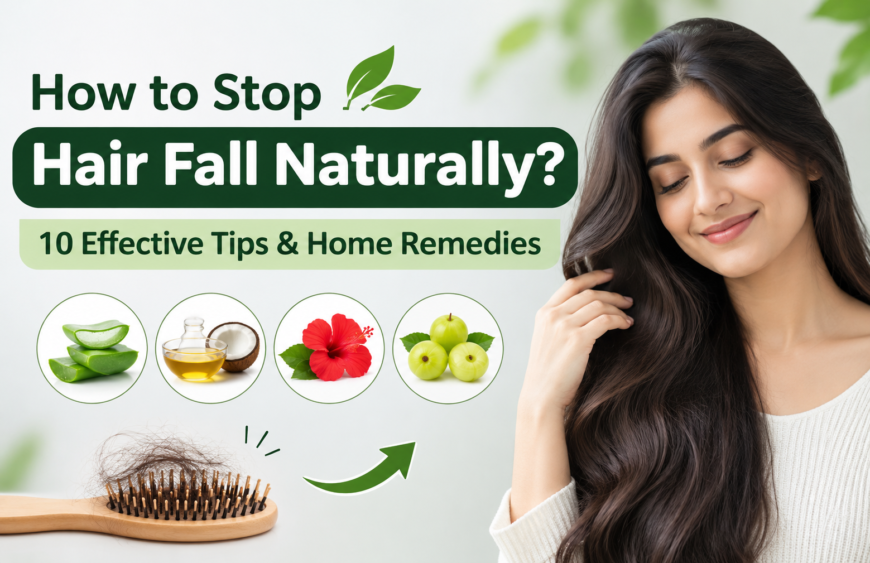
Hair fall is a common problem for both men and women. Finding hair on your pillow, comb, or bathroom floor can be stressful. While losing some hair every day is normal, excessive hair fall can affect your confidence and make you worry about your hair health.
The good news is that simple changes in your daily routine can help reduce hair fall caused by poor nutrition, stress, and hair damage. Natural remedies may also help keep your scalp healthy and prevent hair breakage.
If you are wondering how to stop hair fall naturally, this guide covers 10 practical tips, useful home remedies, and healthy habits that can help you take better care of your hair.
What Causes Hair Fall?
Before trying any treatment, it is important to understand why your hair is falling out.
Losing around 50 to 100 hair strands daily is normal. However, excessive shedding or visible thinning may indicate an underlying problem.
Some common causes of hair fall include:
Poor nutrition: A lack of protein, iron, or other essential nutrients can weaken hair health.
Stress: Physical and emotional stress can interrupt the normal hair growth cycle.
Hormonal changes: Thyroid problems, pregnancy, and menopause can contribute to hair loss.
Genetics: Hereditary hair loss is common in both men and women.
Hair damage: Frequent heat styling, chemical treatments, and tight hairstyles can damage hair.
Scalp problems: Certain infections and inflammatory conditions may affect hair growth.
Understanding the cause helps you choose the right approach to managing hair fall.
10 Natural Ways to Reduce Hair Fall
1. Eat a Protein-Rich Diet
Your hair is mainly made of keratin, a type of protein. Getting enough protein supports normal hair growth and helps maintain healthy hair.
Include protein-rich foods such as eggs, paneer, lentils, beans, yogurt, and nuts in your daily diet.
Also, eat fruits and vegetables that provide iron, zinc, and vitamins. Spinach, amla, oranges, and seeds are good choices.
A balanced diet is one of the easiest ways to support healthier hair naturally.
2. Massage Your Scalp Gently
A gentle scalp massage can help you relax and make your hair care routine more enjoyable.
Use your fingertips to massage your scalp in circular movements for about five minutes.
You can use a little coconut oil if it suits your scalp. Avoid applying too much pressure or scratching with your nails.
Although scalp massage feels soothing, there is limited scientific evidence that it directly stops hair loss.
3. Apply Coconut Oil to Your Hair
Coconut oil is a popular natural remedy for dry and damaged hair. It can help reduce protein loss from hair strands and protect against breakage.
For better hair care:
Take a small amount of coconut oil.
Apply it gently to your hair and scalp.
Leave it for 30–60 minutes.
Wash with a mild shampoo.
Use this method once or twice a week.
Coconut oil can improve hair condition, but it cannot reverse genetic hair loss.
4. Avoid Excessive Heat Styling
Frequent use of straighteners, curling irons, and blow dryers can damage your hair.
High temperatures remove moisture from hair strands, making them dry and more likely to break.
Try to air-dry your hair whenever possible. If you need styling tools, use a lower temperature and apply a heat protectant.
Reducing heat damage can help your hair look smoother and healthier.
5. Choose a Gentle Shampoo
A clean scalp is important for maintaining healthy hair.
Choose a shampoo that matches your scalp type. Avoid products that leave your scalp feeling irritated or excessively dry.
While washing, gently massage the scalp instead of rubbing your hair aggressively.
Use conditioner after shampooing to reduce tangles and breakage.
Remember, washing your hair does not cause hair loss. Many strands visible during washing were already naturally shedding.
6. Manage Your Stress
Stress is a common reason for temporary hair shedding.
Major emotional stress, illness, or sudden lifestyle changes can push more hair into the shedding phase.
Simple activities can help manage everyday stress:
Practice yoga or meditation.
Take a daily walk.
Spend time outdoors.
Try deep breathing exercises.
Maintain a regular sleep schedule.
Managing stress supports your overall health and may help reduce stress-related hair shedding.
7. Get Enough Sleep
Good sleep plays an important role in keeping your body healthy.
Adults generally need around seven to nine hours of sleep each night.
Try going to bed at the same time daily. Avoid excessive screen time before sleeping and maintain a comfortable bedroom environment.
Better sleep supports general well-being, although it is not a direct cure for hair loss.
8. Avoid Tight Hairstyles
Tight ponytails, braids, and buns can pull on your hair roots.
Over time, repeated pulling may cause traction alopecia, a condition that can lead to permanent hair loss if ignored.
Choose loose, comfortable hairstyles and avoid tying your hair tightly while sleeping.
9. Protect Your Hair From Damage
Sun exposure, pollution, and harsh weather can leave your hair dry and brittle.
Wear a scarf or hat when spending long hours outdoors. Wash your hair as needed to remove sweat, dirt, and product buildup.
These habits help prevent hair damage and keep your scalp comfortable.
10. Follow a Consistent Hair Care Routine
Healthy hair care requires patience.
Avoid switching between different shampoos, oils, and remedies every few days.
Instead, follow a simple routine that includes gentle washing, conditioning, a balanced diet, and limited heat styling.
Hair grows slowly, so visible improvement may take several months.
Best Home Remedies for Hair Fall
Natural ingredients have been part of traditional hair care for generations. While they may improve hair condition, most have limited scientific evidence for directly stopping hair loss.
Aloe Vera
Aloe vera has soothing and moisturising properties that may help relieve scalp dryness.
Apply pure aloe vera gel to your scalp, leave it for 15–20 minutes, and rinse thoroughly.
Always perform a patch test before using it.
Amla
Amla, also known as Indian gooseberry, contains vitamin C and antioxidants.
You can include fresh amla in your diet or use amla-based hair products for conditioning.
However, there is limited evidence that applying amla directly stimulates new hair growth.
Fenugreek Seeds (Methi)
Fenugreek seeds are widely used in traditional hair masks.
Soak one tablespoon of methi seeds overnight, grind them into a smooth paste, and apply it to your hair for 15–20 minutes before rinsing.
This may help make hair feel softer, but its hair growth benefits remain unproven.
Bhringraj Oil
Bhringraj is a traditional Ayurvedic herb commonly found in hair oils.
It can be used as part of a gentle oiling routine for conditioning, provided it does not irritate your scalp.
However, more human research is needed to confirm its effectiveness against hair loss.
When Should You See a Dermatologist?
Natural hair care may help with breakage and temporary shedding, but some conditions need medical treatment.
Consult a dermatologist if you notice sudden hair loss, bald patches, rapid thinning, scalp inflammation, or shedding that continues for several months.
A doctor can help identify the cause and recommend suitable treatment.
Conclusion
Learning how to stop hair fall naturally starts with making small, healthy changes to your lifestyle. A balanced diet, proper sleep, stress management, gentle hair care, and avoiding excessive heat can help protect your hair.
Traditional remedies such as coconut oil, amla, aloe vera, and bhringraj may also support hair conditioning. However, results depend on the cause of hair fall, and no single remedy works for everyone.
If you prefer an Ayurvedic approach, you can also explore KeshX by Goelar Health Group as an addition to your hair care routine. Check its ingredients and recommended usage before trying it.
With patience, consistent care, and the right approach, you can work toward healthier, stronger-looking hair.