




Periods often come with more than just bleeding. Cramps, bloating, fatigue, headaches, mood swings, and digestive changes are all common, and many people spend a few days each month simply trying to feel like themselves again. Along the way, you’ve probably come across a long list of period “rules” – don’t drink cold water, don’t exercise, avoid this food, never eat that. Not all of these rules are medically necessary, and some are outright myths.
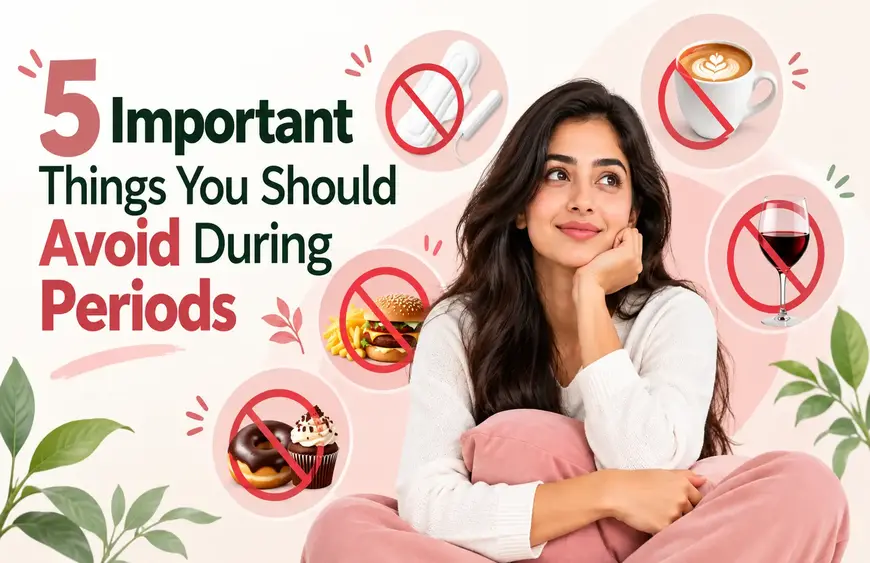
That said, a few habits genuinely can make period symptoms feel worse. During your period, it helps to limit poor menstrual hygiene practices, excessively salty or processed foods, too much sugar and junk food, and excess caffeine or alcohol – and, just as importantly, to avoid ignoring symptoms that are unusually severe. Here’s a closer look at each one, why it matters, and what to do instead.
Avoid Poor Menstrual Hygiene Habits
Hygiene mistakes during your period are rarely about “not being clean enough.” They’re usually small, easy-to-miss habits that add up.
A few common ones include:
- Wearing heavily fragranced pads or liners if your skin tends to get irritated
- Changing pads, tampons, or menstrual cups less often than recommended
- Washing your hands inconsistently before and after changing a product
- Using harsh soaps or scented washes on sensitive skin
- Ignoring unusual odor, discharge, itching, or irritation instead of checking in with a doctor
One distinction worth understanding: cleaning the outer vulva with warm water (and a mild, unscented cleanser if you prefer) is different from washing inside the vagina. The vagina cleans itself naturally, so douching or internal washing isn’t necessary and can actually disrupt its natural balance.
For pads and tampons, follow the change frequency listed on the product packaging rather than a generic online rule – this usually depends on your flow and the specific product.
What to do instead: Change your product regularly based on your flow, wash your hands before and after, clean the external area gently, and pay attention to anything that feels different from your usual pattern.
Avoid Excessively Salty and Highly Processed Foods
Very salty packaged snacks, fast food, processed meats, and heavily processed meals are worth limiting during your period – not because salt “causes” period pain, but because a high sodium intake can lead your body to hold on to more water. For many people, that shows up as bloating that already feels worse due to hormonal changes.
This doesn’t mean every packaged food is off-limits or that one salty meal will ruin your period. It’s really about overall pattern rather than a single dish.
What to do instead: Lean toward fresh fruit, vegetables, whole grains, nuts, seeds, and home-cooked meals when you can, and stay adequately hydrated – water actually helps reduce bloating more than restricting fluids does.
3. Avoid Excessive Sugar and Heavy Junk-Food Intake
Cravings around your period are extremely common, and there’s nothing wrong with that. The concern isn’t the occasional sweet treat – it’s when most meals during your period end up built around sugary drinks, pastries, and highly processed snacks. This pattern can contribute to energy crashes and mood swings on top of what your hormones are already doing.
There’s no need to demonize sugar here. A small amount of chocolate or dessert isn’t going to undo anything.
What to do instead: Balance cravings with fruit, yogurt, nuts, whole-grain snacks, and protein-rich meals, and enjoy a treat – including dark chocolate – without guilt. Moderation and overall diet quality matter far more than eliminating any single food.
Avoid Too Much Caffeine and Alcohol
Caffeine: Coffee, energy drinks, and strong tea affect people differently. In larger amounts, caffeine may contribute to headaches, disrupted sleep, anxiety, or digestive discomfort for some people during their period. This doesn’t mean everyone needs to quit caffeine – if you’re a regular coffee drinker, suddenly cutting it out can itself trigger withdrawal headaches. The more useful approach is to notice how your body responds and keep intake moderate if it seems to make your symptoms worse.
Alcohol: Alcohol can contribute to dehydration, poorer sleep quality, and headaches, all of which can make period symptoms feel more intense. This isn’t about avoiding alcohol entirely – it’s simply worth being aware of the effect it may have during a week when your body is already managing hormonal shifts.
Avoid Ignoring Your Body’s Warning Signs
This is the point that often gets left out of period advice, but it may be the most important one. “Avoid” during your period shouldn’t only apply to food and hygiene – it should also apply to ignoring symptoms that are unusually severe.
Pay attention if you experience:
- Period pain that is severe or steadily getting worse
- Very heavy bleeding
- Fainting or severe dizziness
- Persistent fever
- Significant weakness or shortness of breath
- Pain that stops you from going about your normal day
- Any symptom that feels much more intense than what’s typical for you
These symptoms don’t automatically mean something is seriously wrong, but they’re not something to just push through either. Severe menstrual symptoms can sometimes point to an underlying condition that’s worth having evaluated.
Should You Avoid Spicy Foods During Your Period?
Spicy food is a common target of period advice, but the reasoning is often overstated. Spicy foods don’t directly affect the uterus the way many myths suggest. What they can do is trigger digestive symptoms like heartburn, stomach irritation, loose stools, or nausea – and if you already tend to have digestive discomfort during your period, spicy food may make that worse.
If spicy food triggers digestive discomfort for you, it’s reasonable to cut back during your period. If it doesn’t bother you, there’s no universal rule that says you need to avoid it.
Period Food and Hygiene Myths You Don’t Need to Follow
Myth: Cold water or cold foods stop your period or make cramps worse.
There’s no evidence that drinking cold water affects your menstrual flow or cramps. Temperature of food or drink doesn’t have this kind of effect on the uterus.
Myth: You must completely eliminate certain foods during your period.
Dietary needs and tolerances vary from person to person. There’s no universal list of foods that everyone must avoid while menstruating.
Myth: You should avoid exercise during your period.
For many people, gentle to moderate physical activity – walking, stretching, yoga, or even a regular workout – can actually help with cramps and mood, as long as it feels comfortable for you.
Myth: Every period symptom is just “normal period pain.”
Mild to moderate cramping, bloating, and fatigue are common. But severe or unusual symptoms shouldn’t automatically be brushed off as normal – they’re worth mentioning to a doctor.
What Should You Do During Your Period Instead?
Rather than focusing only on what to cut out, here’s a simple checklist for what to prioritize:
- Stay hydrated throughout the day
- Eat balanced meals with enough protein and fiber
- Include iron-rich foods, especially if your flow is heavy
- Use menstrual products appropriately for your flow
- Get enough sleep
- Stay physically active if it feels comfortable
- Use a heating pad or warm compress for cramps if it helps
- Track your cycle and symptoms so you notice patterns
- Pay attention to anything that feels unusual for you
When Period Symptoms Need Medical Attention
Most period symptoms can be managed at home with rest, hydration, and basic self-care. But it’s worth speaking with a healthcare professional if you experience severe pain, very heavy bleeding, persistent or high fever, fainting, significant shortness of breath, severe weakness or dizziness, pain that repeatedly disrupts your daily life, or a sudden, noticeable change in your usual menstrual pattern.
If your symptoms are severe, unusual for you, or interfering with everyday activities, it’s worth discussing them with a healthcare professional rather than assuming they’re something you simply have to live with.
If you’d like extra support alongside these habits, Ayurvedic syrups like Cyclafer Advance Syrup and Cyclafer Syrup are traditionally used for menstrual regularity, comfort, and hormonal wellness. Take them as directed or as advised by a healthcare professional.
Frequently Asked Questions About Things to Avoid During Periods
What should I avoid eating during my period?
It helps to limit excessively salty, highly processed foods and go easy on sugary snacks and drinks. There’s no need to eliminate entire food groups – focus on moderation and balanced, home-cooked meals where possible.
Is it okay to drink coffee during periods?
Yes, for most people moderate coffee intake is fine. If you notice caffeine worsens headaches, anxiety, or sleep during your period, consider cutting back rather than stopping suddenly.
Should I avoid spicy foods during my period?
Only if spicy food tends to cause digestive discomfort for you. Spicy food doesn’t directly worsen cramps for everyone, so this is a personal-tolerance issue rather than a strict rule.
Can I eat chocolate during my period?
Yes. A moderate amount, including dark chocolate, is fine and doesn’t need to be avoided. The concern is relying heavily on sugary snacks as a main source of food, not the occasional treat.
Should I avoid cold water during periods?
No. There’s no evidence that cold water affects menstrual flow, cramps, or period symptoms in any way.
Can I exercise during my period?
Yes, for most people gentle to moderate exercise is safe and can even help with cramps and mood. Listen to your body and adjust intensity based on how you feel.
How often should I change my menstrual product?
Follow the guidance on your specific product’s packaging, and change more frequently on heavier flow days. Going too long without changing a pad or tampon increases irritation and infection risk.
Should I wash inside my vagina during my period?
No. The vagina is self-cleaning, so internal washing or douching isn’t necessary and can disrupt its natural balance. Gently cleaning the outer vulva with warm water is enough.
What symptoms during a period should not be ignored?
Severe pain, very heavy bleeding, fainting, persistent fever, significant weakness, or pain that disrupts daily life shouldn’t be dismissed as normal – these are worth discussing with a doctor.