




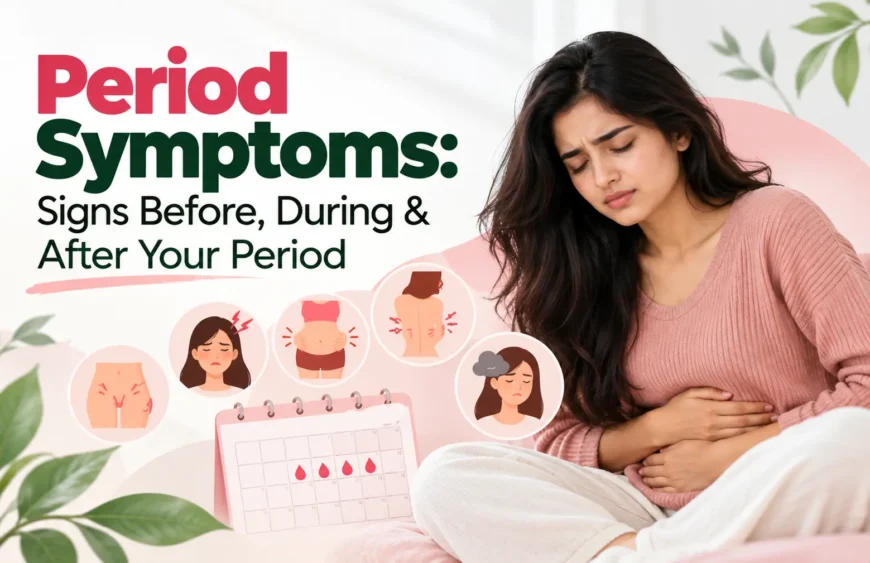
If your body starts feeling “off” a few days before your period arrives, or symptoms linger even after your bleeding stops, you’re not imagining it. Period symptoms don’t begin and end neatly with your bleeding – they can show up days before, shift throughout your cycle, and sometimes stick around afterward too. Understanding these patterns can make it easier to plan ahead, tell what’s normal for your body, and recognize when something needs a closer look. This guide walks through the most common period symptoms before, during, and after menstruation, and explains when it’s worth checking in with a doctor.
How to Know When Your Period Is Coming
Most people notice a cluster of physical and emotional changes in the days leading up to their period. These are commonly grouped under premenstrual symptoms (PMS), and while they vary widely from person to person, some of the most common signs include:
- Abdominal cramps – mild, dull, or crampy sensations in the lower belly
- Lower back discomfort – an achy feeling that can come and go
- Bloating – a feeling of fullness or tightness around the abdomen
- Breast tenderness – soreness or sensitivity
- Mood changes – irritability, low mood, or feeling more emotional than usual
- Fatigue – feeling more tired than normal
- Headaches
- Food cravings or appetite changes
- Acne or skin changes
- Changes in vaginal discharge, which may become thicker just before your period starts
Not everyone experiences all of these, and the intensity can differ from one cycle to the next. Some people notice clear warning signs a week in advance, while others barely notice anything until bleeding starts. Tracking your cycle over a few months can help you learn your own pattern.
How Many Days Before Period Does Pain Start?
For many people, mild cramping or discomfort can begin anywhere from one to five days before their period starts, though this varies quite a bit from person to person.
This pain is often linked to prostaglandins – natural chemicals the body produces that cause the uterus to contract. As prostaglandin levels rise in the days before menstruation, some people begin to feel cramping even before any bleeding appears. For others, pain doesn’t start until the first day of their period, or not at all.
There’s no single “normal” timeline. Some cycles bring earlier, milder discomfort, while others bring little warning at all. What’s more useful than counting exact days is paying attention to your own pattern over several cycles – and noticing when pain feels different from what’s typical for you, especially if it becomes more intense or starts lasting longer than usual.
Common Pain Before Your Period
Pain before a period isn’t limited to the abdomen. It can show up in several areas of the body, often around the same time.
Severe Back Pain Before Period
Lower back discomfort is a common companion to menstrual cramps. This happens because the uterus is close to muscles and nerves in the lower back and pelvis, and the same contractions that cause abdominal cramping can also create referred pain in the back.
For some people, this shows up as a mild, dull ache. For others, back pain before a period can feel more intense – sometimes even more noticeable than the abdominal cramping itself. Occasional moderate back discomfort around your cycle is common, but severe back pain isn’t automatically something to dismiss as “just PMS.” If back pain is intense, doesn’t improve with rest or usual pain relief, or worsens over time, it’s worth having it evaluated by a healthcare professional rather than assuming it’s routine.
Leg Pain Before Period Starts
Some people notice aching or heaviness in their legs, particularly the thighs, in the days before their period. This can be related to the same muscle contractions and hormonal shifts that cause abdominal and back cramping – the discomfort can radiate outward rather than staying confined to the pelvis.
Mild, occasional leg discomfort that eases once your period begins is generally not a cause for concern. However, leg pain that is severe, affects only one leg, comes with swelling, redness, or warmth, or doesn’t follow the usual pattern of your cycle should be looked at by a doctor, since these features can point to causes unrelated to menstruation.
Lower Abdominal Pain Before Period
Lower abdominal pain, often described as cramping, is one of the most recognizable signs of an approaching period. It typically results from the uterine muscles contracting to help prepare for or begin shedding the uterine lining. The sensation can range from a mild pulling feeling to sharper, more noticeable cramps that come in waves.
Timing and intensity vary – some people feel this discomfort only on the first day or two of bleeding, while others feel it building for several days beforehand. If abdominal pain becomes severe, doesn’t respond to usual measures, or is accompanied by other symptoms like fever or unusual discharge, it’s a good idea to speak with a healthcare provider, since these details can matter for identifying the underlying cause.
Other Symptoms Before Your Period
Beyond pain, some less commonly discussed symptoms can also show up before menstruation.
Low Grade Fever Before Period
Body temperature naturally fluctuates across the menstrual cycle, largely due to shifts in hormone levels. Some people notice a slightly warmer feeling or a very small temperature increase around ovulation and in the days leading up to their period. This subtle change is not the same thing as having an actual fever.
A true fever – a more meaningful rise in body temperature – can have many possible causes that are unrelated to your cycle, such as infections. It shouldn’t automatically be chalked up to PMS. If you notice a fever that is persistent, higher than a very mild fluctuation, or accompanied by other symptoms such as pain, chills, or fatigue that doesn’t fit your usual pattern, it’s best to check in with a healthcare professional.
Shortness of Breath Before Period
Some people report feeling more short of breath in the days before their period, and hormonal fluctuations are sometimes discussed as a possible contributing factor. However, breathing difficulty has many potential causes, and it should not be automatically attributed to PMS or menstruation without considering other explanations.
Occasional, mild breathlessness that resolves on its own may not be a concern for some people, but shortness of breath should always be taken seriously. If it is sudden, severe, worsening, or comes with chest pain, dizziness, or a rapid heartbeat, seek medical attention promptly rather than assuming it’s cycle-related.
Post Period Symptoms: What Can Happen After Your Period?
Symptoms don’t always disappear the moment bleeding stops. Some people continue to notice physical or emotional changes in the days that follow, including:
- Fatigue, which can result from blood loss during menstruation
- Headaches
- Bloating
- Mood changes
- Breast tenderness
- Mild abdominal discomfort
- Changes in energy levels
- Changes in vaginal discharge, which often becomes lighter or drier after your period ends
It’s worth remembering that not every symptom experienced after a period is necessarily caused by menstruation itself. Other factors – including diet, sleep, stress, or unrelated health conditions – can also play a role, so it helps to consider the bigger picture rather than assuming every symptom traces back to your cycle.
Post Menstrual Symptoms and How Long They May Last
Post menstrual symptoms can continue for a few days after bleeding ends, though how long they last varies from person to person and cycle to cycle. For some, fatigue or mild discomfort fades within a day or two. For others, symptoms like bloating or mood changes may take closer to a week to fully settle.
Because menstrual cycles differ so much between individuals – in length, hormone patterns, and overall health – there isn’t one “correct” timeline for symptoms to resolve. What matters more is whether symptoms follow a pattern that’s typical for you. If symptoms persist well beyond your usual post-period window, keep intensifying rather than easing, or interfere with daily life, that’s a reasonable signal to check in with a healthcare provider rather than waiting it out indefinitely.
Are These Period Symptoms Normal?
Here’s a quick way to think about what’s typically mild versus what deserves attention.
Common/mild symptoms:
- Mild cramps
- Mild backache
- Bloating
- Temporary fatigue
- Headache
- Mild breast tenderness
- Mood changes
Symptoms that should not be ignored:
- Severe or worsening pain
- Persistent fever
- Significant shortness of breath
- Fainting
- Severe dizziness
- Unusually heavy bleeding
- Pain that interferes with everyday activities
- Symptoms that continue well beyond the expected menstrual period
If your symptoms are mild and follow your usual pattern, some people also find Ayurvedic support helpful alongside rest and self-care. Cyclafer Syrup and Cyclafer Advance Syrup are herbal formulations traditionally used to support menstrual regularity, uterine wellness, hormonal balance, and menstrual comfort. Take them as directed on the packaging or as advised by a qualified healthcare professional and if your symptoms are severe, unusual, or persistent, speak with a doctor rather than relying on self-care alone.
When Should You See a Doctor About Period Symptoms?
Most menstrual symptoms are manageable and don’t require medical care. But it’s worth scheduling an evaluation if your symptoms are:
- Severe
- New or unusual for you
- Becoming progressively worse over time
- Persistent, rather than passing within a few days
- Affecting your work, sleep, exercise, or daily activities
- Associated with fever
- Associated with significant breathing difficulty
- Associated with fainting or severe dizziness
- Associated with unusually heavy bleeding
Trusting your own sense of what feels different from your normal pattern is one of the most useful tools you have. A healthcare professional can help identify the cause and rule out other conditions, so there’s no need to manage concerning symptoms alone.
Frequently Asked Questions
How many days before period pain start?
For many people, mild cramping can begin one to five days before bleeding starts, largely due to rising prostaglandin levels. This timing varies, and some people don’t notice pain until their period actually begins.
How to know when period is coming?
Common early signs include cramping, bloating, breast tenderness, mood changes, fatigue, headaches, and changes in vaginal discharge. Not everyone experiences the same signs, and patterns can shift from cycle to cycle.
Can you have severe back pain before your period?
Yes, back pain can occur alongside cramps due to uterine contractions affecting nearby muscles and nerves. However, severe or worsening back pain shouldn’t be assumed to be routine and is worth having evaluated.
Is lower abdominal pain before period normal?
Mild to moderate cramping before a period is common and usually related to uterine contractions. Pain that is severe, doesn’t respond to usual relief measures, or comes with other symptoms should be checked by a doctor.
Why does my leg hurt before my period starts?
Leg discomfort can be related to the same muscle contractions and hormonal changes that cause abdominal cramping. Severe pain, swelling, or pain in only one leg is different from typical menstrual discomfort and warrants medical attention.
Can you have a low grade fever before period?
Body temperature can rise slightly around ovulation and before a period due to hormonal shifts, but this is different from an actual fever. A persistent or more significant fever should be evaluated, since it may have causes unrelated to menstruation.
What are common post period symptoms?
After bleeding ends, some people notice fatigue, headaches, bloating, mood changes, breast tenderness, or mild abdominal discomfort. Not all post-period symptoms are necessarily caused by menstruation itself.
What are post menstrual symptoms?
Post menstrual symptoms refer to physical or emotional changes that continue for a few days after your period ends. How long they last varies by individual, and symptoms that persist much longer than usual should be discussed with a healthcare provider.
Is shortness of breath before period normal?
Shortness of breath shouldn’t automatically be attributed to PMS, since it can have many causes. Sudden, severe, or worsening breathlessness – especially with chest pain or dizziness – needs prompt medical evaluation.