




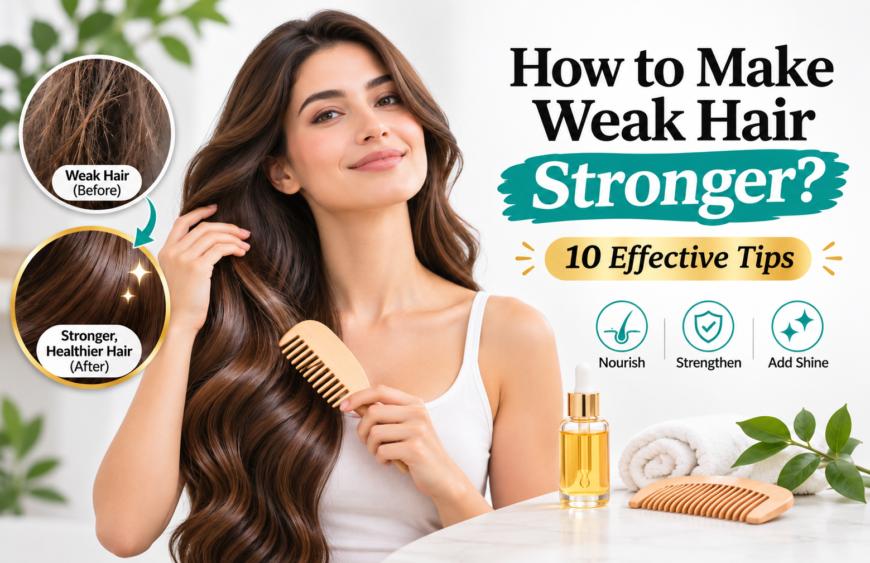
Weak hair can be frustrating, especially when it breaks easily, feels rough, or looks dull despite regular care. Many people experience weak hair due to poor nutrition, excessive heat styling, harsh chemical treatments, or unhealthy hair care habits. Over time, these factors can damage hair strands and make them more likely to break.
The good news is that you can improve your hair’s condition with a few simple changes to your daily routine. Eating nutritious food, using gentle hair products, and protecting your hair from damage can help maintain healthier, stronger-looking hair. If you are wondering how to make weak hair stronger, this guide explains practical tips, natural remedies, and healthy habits that can make a real difference.
What Causes Weak and Damaged Hair?
Before learning how to strengthen weak hair, it is important to understand what causes the problem. Hair is mainly made of a protein called keratin, which gives it structure and strength. When hair becomes damaged or loses moisture, it can turn dry, brittle, and more likely to break.
Several factors can contribute to weak hair, including:
Poor nutrition: A lack of protein, iron, zinc, and other essential nutrients can affect healthy hair growth.
Excessive heat styling: Frequent use of straighteners, curling irons, and blow dryers can damage hair strands.
Chemical treatments: Regular bleaching, colouring, and chemical straightening can weaken hair.
Improper hair care: Harsh brushing, rough towel drying, and unsuitable products can increase breakage.
Environmental damage: Sun exposure, pollution, and dry weather can affect hair condition.
Identifying these causes can help you choose the right hair care routine and prevent further damage.
10 Effective Tips to Make Weak Hair Stronger Naturally
1. Eat a Healthy, Protein-Rich Diet
Healthy hair starts with proper nutrition. Since hair is primarily made of protein, your body needs enough protein to support normal hair growth. A diet lacking essential nutrients may contribute to weak hair and excessive shedding.
Include foods such as eggs, lentils, paneer, yogurt, nuts, and beans in your meals. Green vegetables, fruits, and whole grains also provide important vitamins and minerals. Eating a balanced diet regularly is more beneficial than depending on a single food or supplement.
2. Keep Your Hair Properly Moisturised
Dry hair is more likely to become rough, tangled, and brittle. Keeping your hair conditioned helps reduce friction between strands and makes it easier to manage. This is especially important for people with naturally dry, curly, or chemically treated hair.
Apply conditioner after every shampoo, focusing on the middle and ends of your hair. You can also use a leave-in conditioner if your hair needs extra moisture. Regular conditioning can improve softness and help prevent unnecessary breakage.
3. Use Coconut Oil to Protect Hair
Coconut oil is a popular natural ingredient for maintaining healthy hair. Research suggests that it can reduce protein loss from hair strands, helping protect them against certain types of damage. It is particularly useful for hair that feels dry or breaks easily.
Apply a small amount of coconut oil to your hair lengths and leave it for about 30–60 minutes before washing. You can follow this routine once or twice a week, depending on your hair type. Although coconut oil can improve hair condition, it cannot permanently repair severely damaged strands.
4. Reduce Heat Styling
Regular exposure to high temperatures can weaken the protective outer layer of your hair. Straighteners, curling irons, and blow dryers may make hair look smooth temporarily, but excessive use can cause dryness and breakage.
Try allowing your hair to air-dry whenever possible. If you need to use heat styling tools, choose a lower temperature and apply a suitable heat protectant. Reducing unnecessary heat exposure is one of the simplest ways to protect weak hair.
5. Wash Your Hair the Right Way
Washing your hair correctly can help prevent damage and maintain scalp cleanliness. Using very hot water, rubbing hair aggressively, or choosing unsuitable products can leave strands feeling dry and tangled.
Choose a gentle shampoo that matches your scalp type and apply it mainly to the scalp. Massage lightly with your fingertips instead of scratching with your nails. After washing, use conditioner and gently remove excess water with a soft towel rather than rubbing your hair.
6. Be Gentle With Wet Hair
Wet hair can be more vulnerable to stretching and breakage, especially when handled roughly. Pulling a comb through tangled strands may cause unnecessary damage and make already weak hair worse.
Use a wide-tooth comb and begin detangling from the ends before slowly moving upward. People with curly hair may find it easier to detangle while their hair is damp and conditioned. Avoid pulling or twisting your hair forcefully, whether it is wet or dry.
7. Protect Your Hair While Sleeping
Your hair experiences friction when it rubs against your pillow during sleep. This can lead to tangles, frizz, and breakage, particularly if your hair is already dry or damaged.
If you have long hair, consider keeping it in a loose braid before going to bed. A smooth pillowcase may also help reduce friction and tangling. Avoid sleeping with tightly tied hairstyles that pull on your hair roots.
8. Include Essential Vitamins and Minerals
Vitamins and minerals play an important role in supporting normal hair growth. Iron, zinc, vitamin D, and other nutrients contribute to different functions that help maintain overall hair health. A deficiency in certain nutrients may lead to increased shedding or poor hair growth.
Include green vegetables, seasonal fruits, nuts, seeds, and protein-rich foods in your diet. Avoid taking hair supplements without professional advice, as they may not help unless you have a deficiency. Excessive intake of some vitamins and minerals can also be harmful.
9. Avoid Tight Hairstyles and Chemical Treatments
Tight ponytails, braids, and buns can place continuous tension on hair strands and roots. Over time, this pulling may cause breakage and even contribute to a condition called traction alopecia.
Choose comfortable hairstyles that do not pull tightly on your scalp. It is also helpful to reduce frequent bleaching, colouring, and chemical straightening. Giving your hair a break from harsh treatments can prevent additional damage while healthier hair grows.
10. Maintain a Consistent Hair Care Routine
Making weak hair stronger requires patience and regular care. Frequently changing shampoos, oils, or hair masks can make it difficult to understand which products actually suit your hair.
Build a simple routine that includes gentle washing, proper conditioning, balanced nutrition, and protection from heat damage. Focus on preventing further breakage rather than expecting instant results. Although damaged hair cannot completely repair itself, good care can improve its appearance and help protect new growth.
Best Natural Home Remedies for Weak Hair
Natural ingredients can be useful for conditioning hair and improving its manageability. However, most homemade remedies have limited scientific evidence for directly strengthening hair follicles or stimulating growth.
Aloe Vera for Dry and Rough Hair
Aloe vera is widely used for its soothing and moisturising properties. It may help make dry hair feel softer and improve scalp comfort in some people. Apply pure aloe vera gel to your hair, leave it for 15–20 minutes, and rinse thoroughly. Always perform a patch test before use to avoid possible irritation.
Amla for Healthy Hair Care
Amla, also known as Indian gooseberry, is a traditional ingredient used in Ayurvedic hair care. It contains vitamin C and antioxidants that support general health when included in a balanced diet. Amla-based oils and hair products are also used for conditioning, although evidence for directly strengthening hair is limited.
Fenugreek Seeds for Hair Conditioning
Fenugreek seeds, commonly known as methi, are often used in homemade hair masks. When soaked in water, they develop a slippery texture that may help make hair easier to manage. Soak a tablespoon of seeds overnight, grind them into a paste, and apply it for 15–20 minutes before rinsing thoroughly. Avoid this remedy if you are allergic to fenugreek.
When Should You Consult a Dermatologist?
Sometimes weak hair is connected to an underlying health problem rather than external damage. If you experience sudden thinning, excessive shedding, bald patches, or persistent scalp irritation, it is best to consult a dermatologist.
A healthcare professional can help identify possible causes, including nutritional deficiencies, thyroid problems, and scalp conditions. Getting the right diagnosis is important because different hair problems require different treatments.
Conclusion
Understanding how to make weak hair stronger begins with adopting healthy habits and protecting your hair from everyday damage. A balanced diet, regular conditioning, gentle washing, and reduced heat styling can help improve hair strength and manageability over time.
Natural ingredients such as coconut oil, aloe vera, and amla may also support your hair care routine. If you prefer Ayurvedic hair care, you can explore KeshX by Goelar Health Group as an additional option, after checking its ingredients and recommended usage.
With patience and consistent care, you can reduce breakage and maintain smoother, healthier, stronger-looking hair.